Colleaguezone- ServiceNow Implementation
ColleagueZone is CVS Health’s internal employee platform, supporting HR, IT, and workplace needs across a highly regulated, multi-department organization.
Overview
ColleagueZone began as a fragmented set of employee tools spread across HR, IT, and legacy portals. Employees struggled to understand where to go, what applied to them, and how to complete common tasks efficiently. My role focused on evolving ColleagueZone into a scalable platform aligning teams, simplifying navigation, and establishing shared patterns that could support multiple departments without duplicating effort.
Role
Lead Product
Designer
Team
HR, IT, Compliance, ServiceNow
Platform
Desktop
NowMobile
ServiceNow Employee Center
Duration
01/2022- 07/2022
A unified, task-based employee experience built on ServiceNow.
I led the design of a unified ColleagueZone experience that consolidated HR and IT services into a task-first navigation model, enabling employees to complete common actions without understanding internal org structure.
AI-powered support (ServiceNow Virtual Agent)
Conversational AI helps employees find answers and initiate requests faster.
Unified request & status tracking
Surface active requests, approvals, and next steps in one place
Task-first navigation
Help employees complete common actions without needing to understand internal org structure.e.ort.
Scalable, platform-native design
Built on Employee Center components to scale, govern, and iterate efficiently.
How I approached the problem.
ColleagueZone supported HR, IT, and Compliance services, but employees experienced it as fragmented and inconsistent. Each team optimized for their own workflows, which created gaps in clarity for end users.
The core challenge was not visual consistency it was aligning teams around a shared experience model.
The pain points employees actually felt.
Employees accessed HR, IT, and workplace services through multiple entry points that behaved differently depending on ownership. While each area functioned independently, the overall experience felt inconsistent and difficult to navigate forcing employees to relearn patterns every time they crossed domains.
The problem wasn’t missing information; it was fragmentation that made it hard to know where to start, what applied to an individual, and which paths were authoritative.
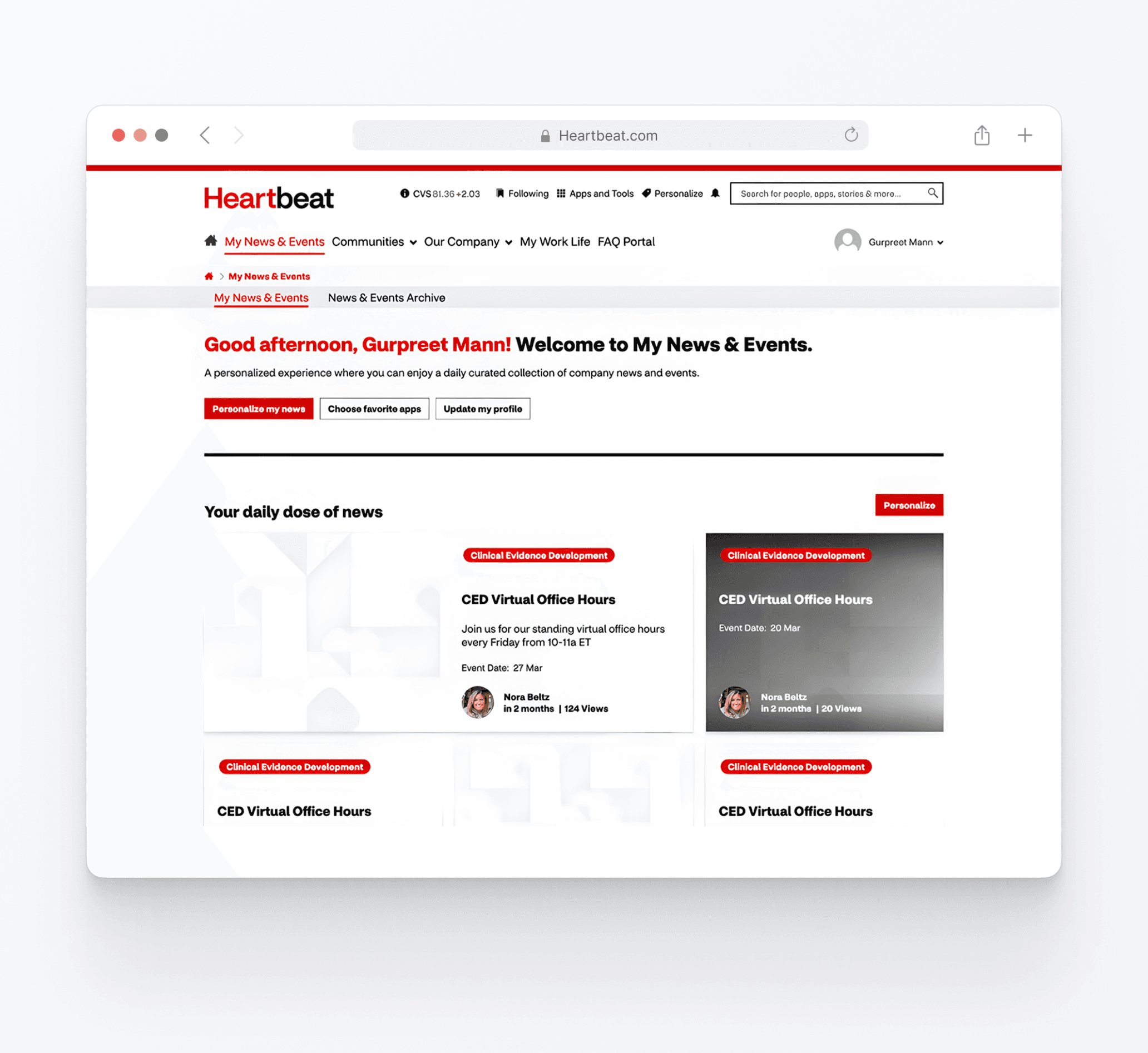
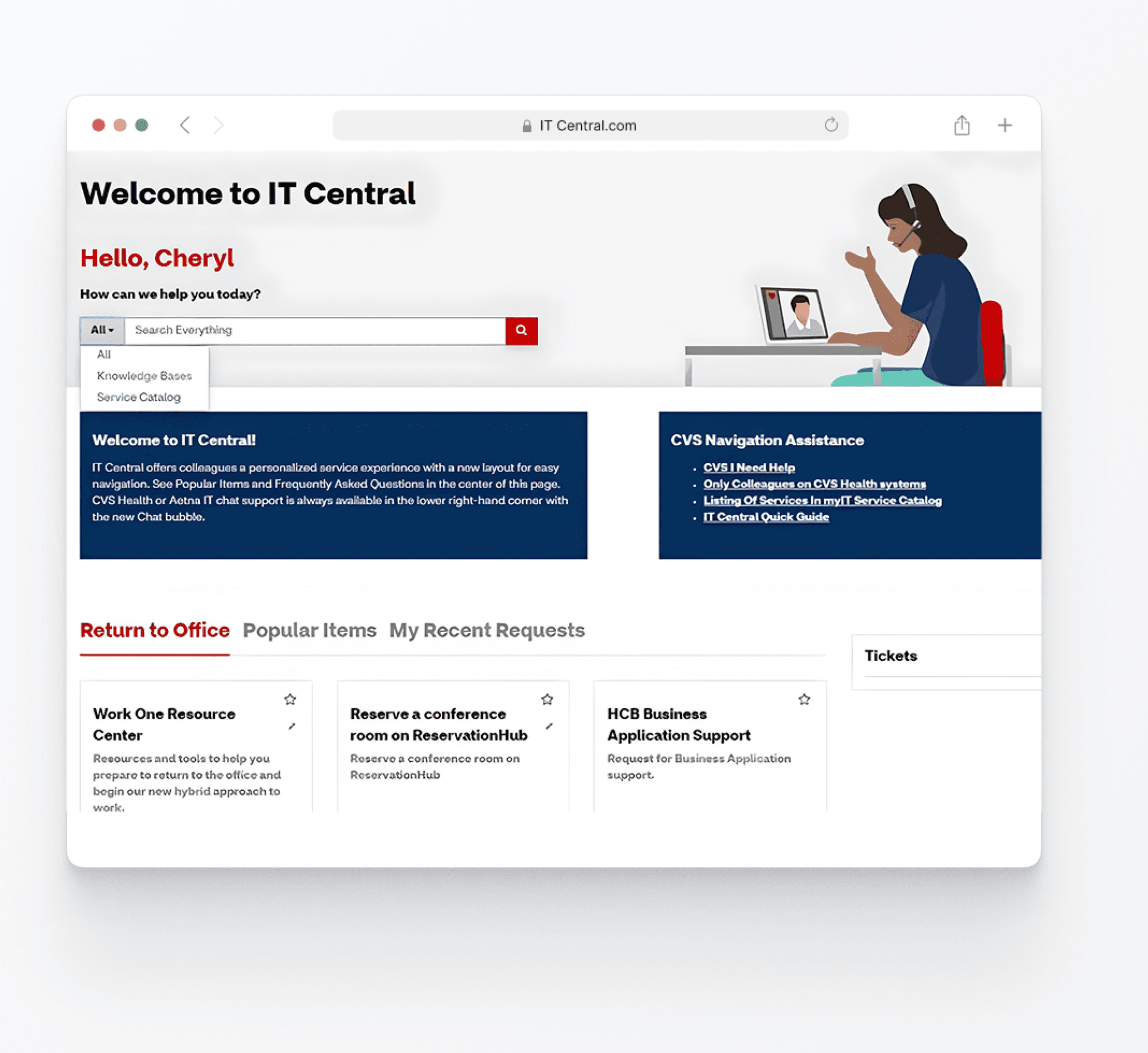
The core issue wasn’t missing content it was inconsistent structure and unclear ownership across HR and IT entry points.
Turning opinions into shared priorities.
Before designing solutions, I focused on aligning teams that had historically operated independently. Through stakeholder interviews and working sessions with HR, IT, and Compliance partners, I surfaced differences in ownership models, success metrics, and assumptions about employee needs.
These conversations helped shift the work from debating solutions to agreeing on the underlying problems design needed to solve creating a shared foundation for decision-making.
“From an IT perspective, the biggest challenge is balancing flexibility with governance. We need solutions that scale without creating one-off experiences we can’t support long-term.”

James H.
IT Senior Manager
@ CVS Health
“We’re often asked to own content that spans multiple systems. Without a clear experience model, it’s hard to keep information consistent or know where employees should start.”

Cheryl B.
HR Director
@ CVS Health
“I don’t really care which team owns something—I just want to know where to go and whether my request went through.”

Ryan S.
Analyst
@ CVS Health
Alignment reduced churn later in the design process.
Grounding decisions with representative roles.
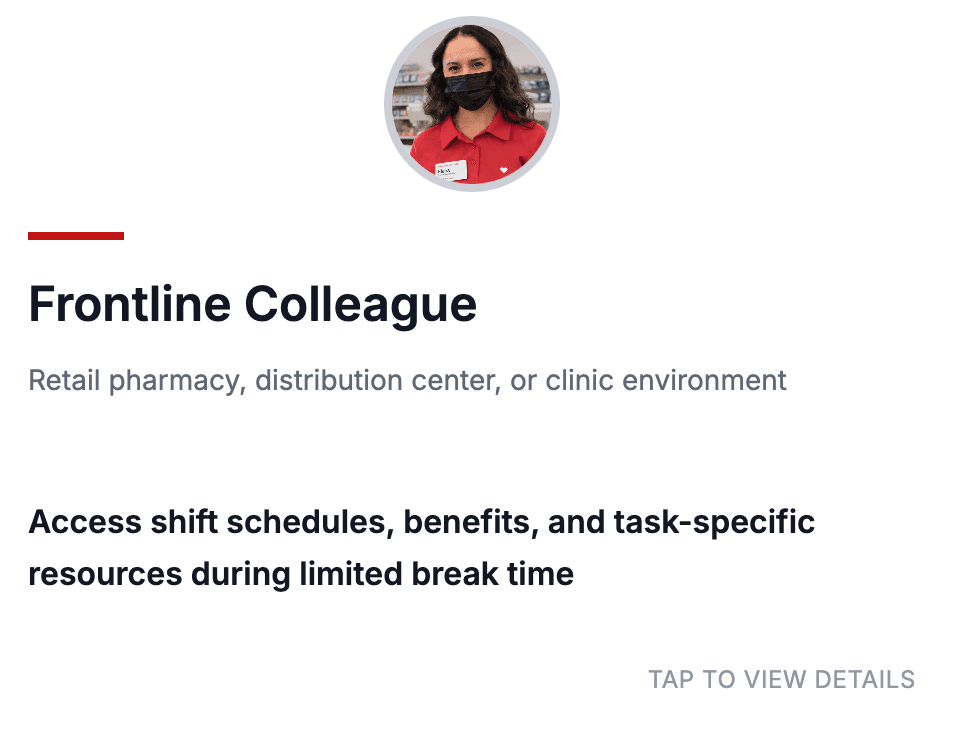
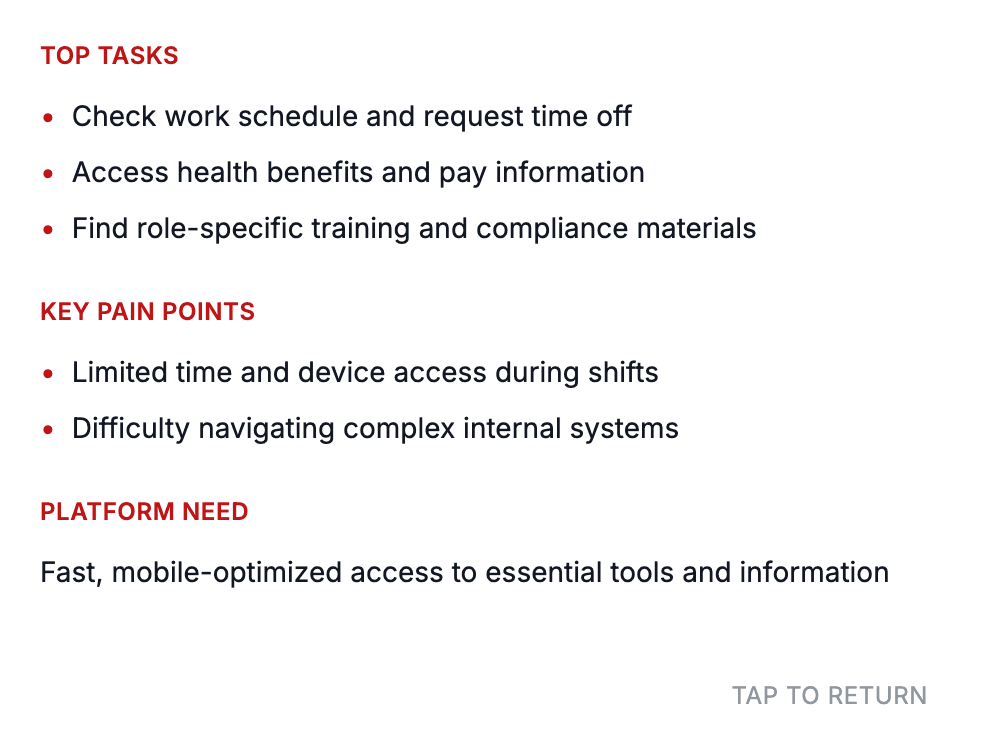
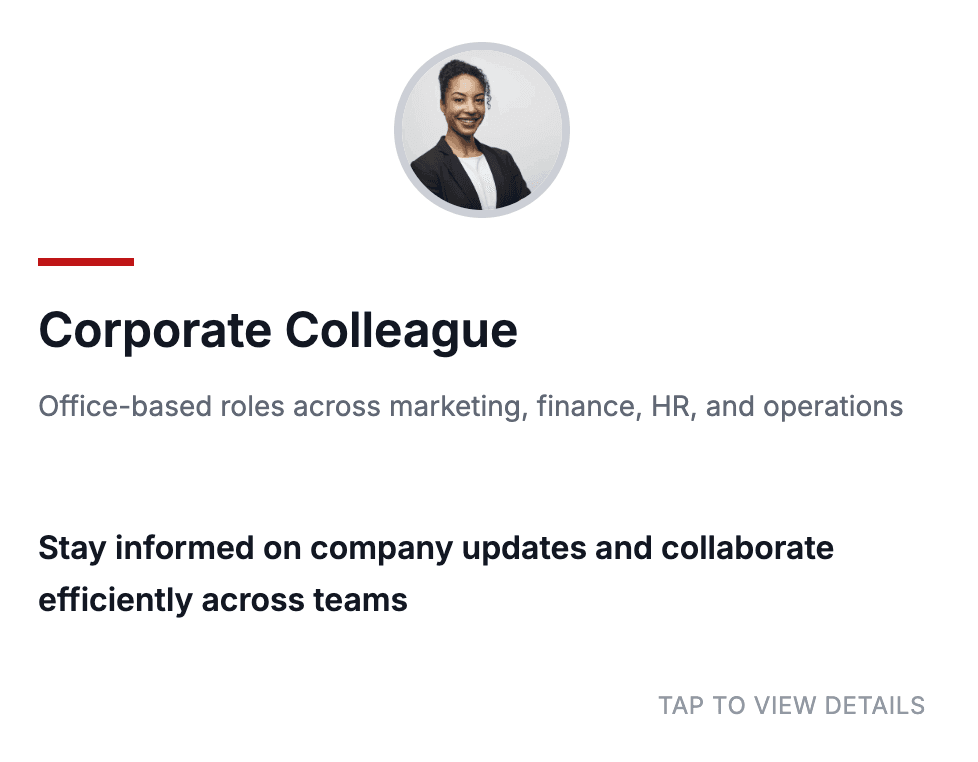
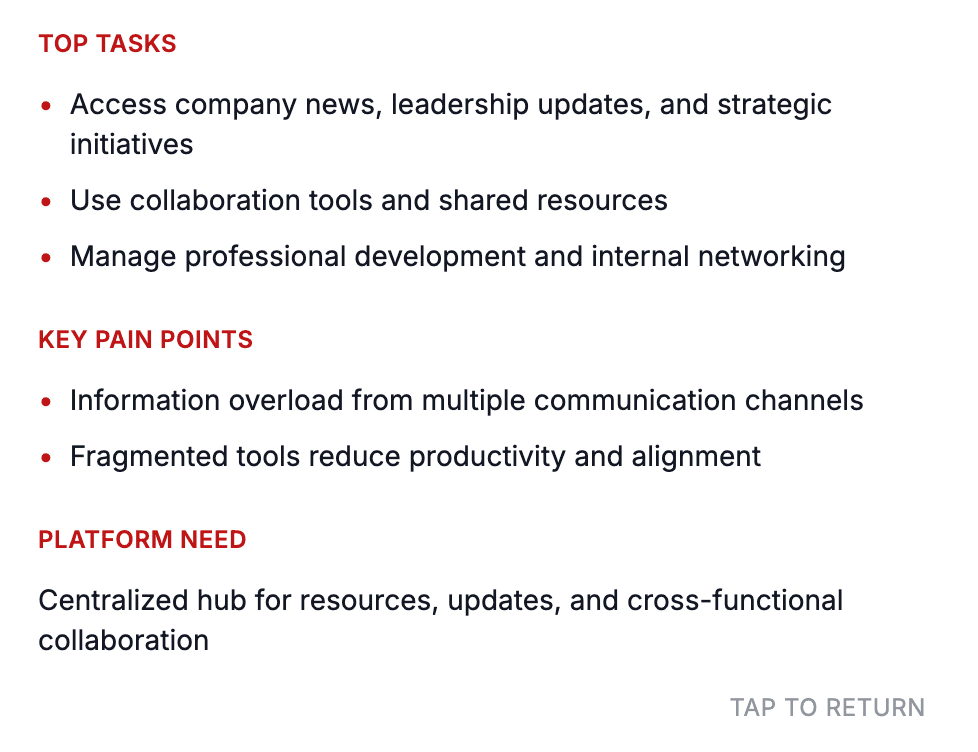
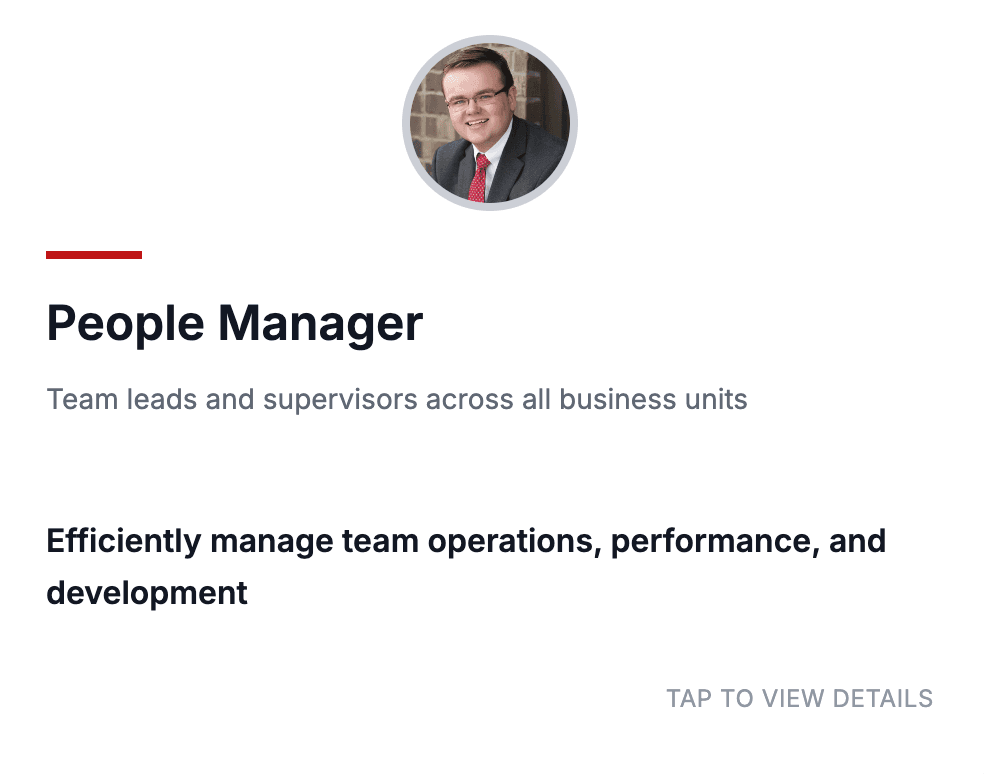
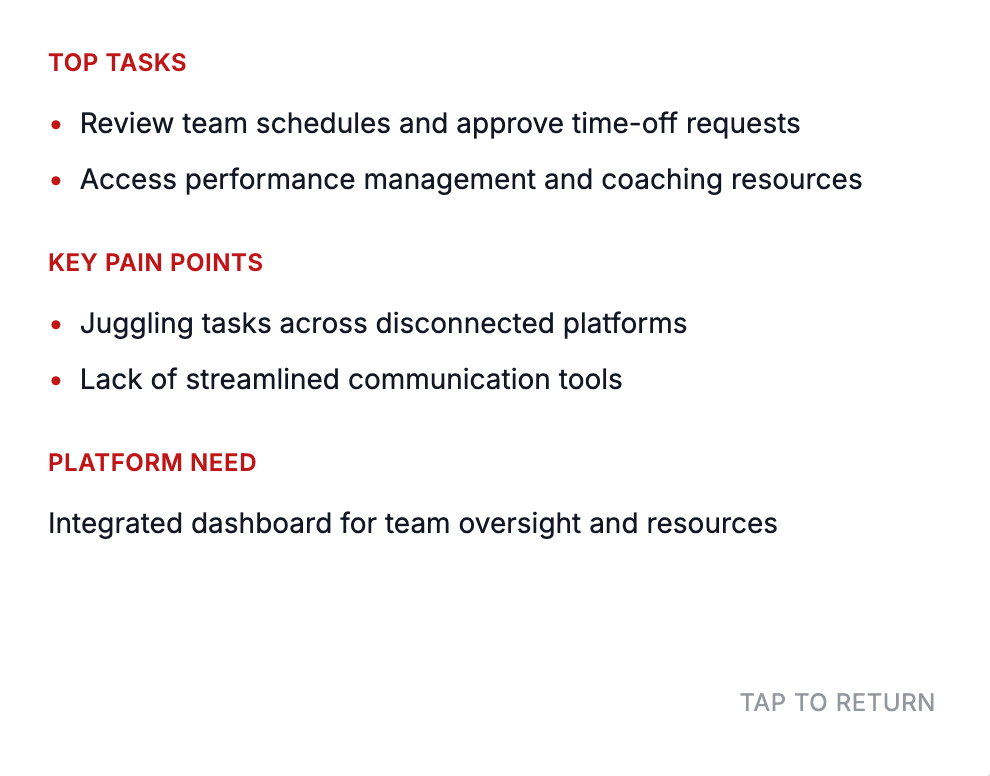
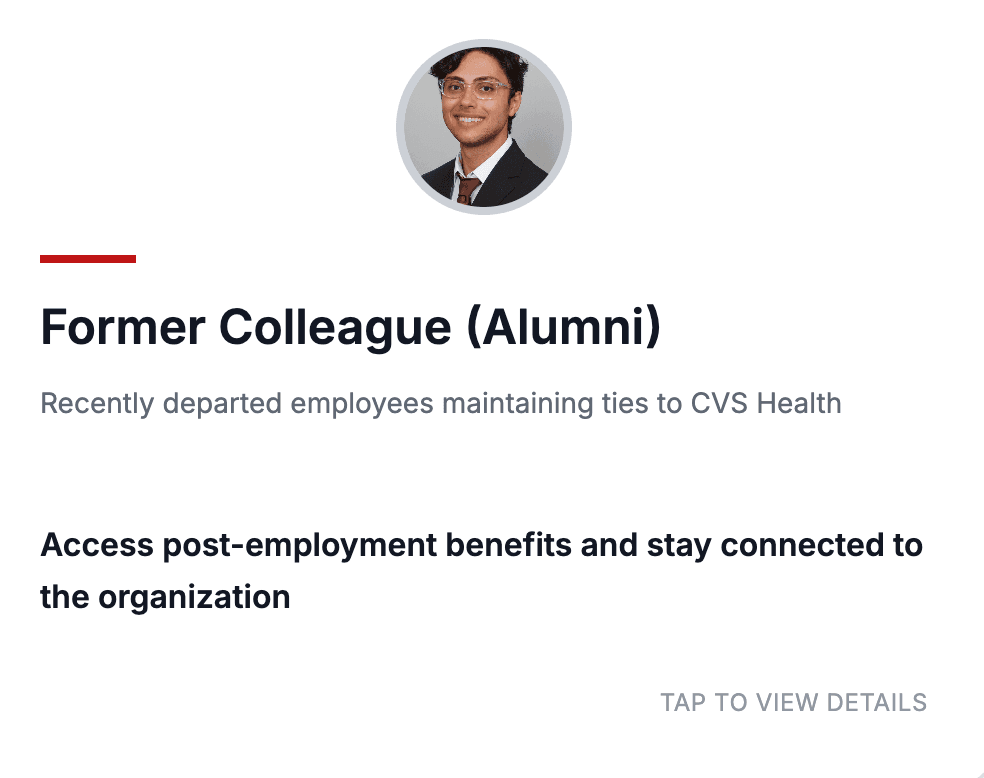
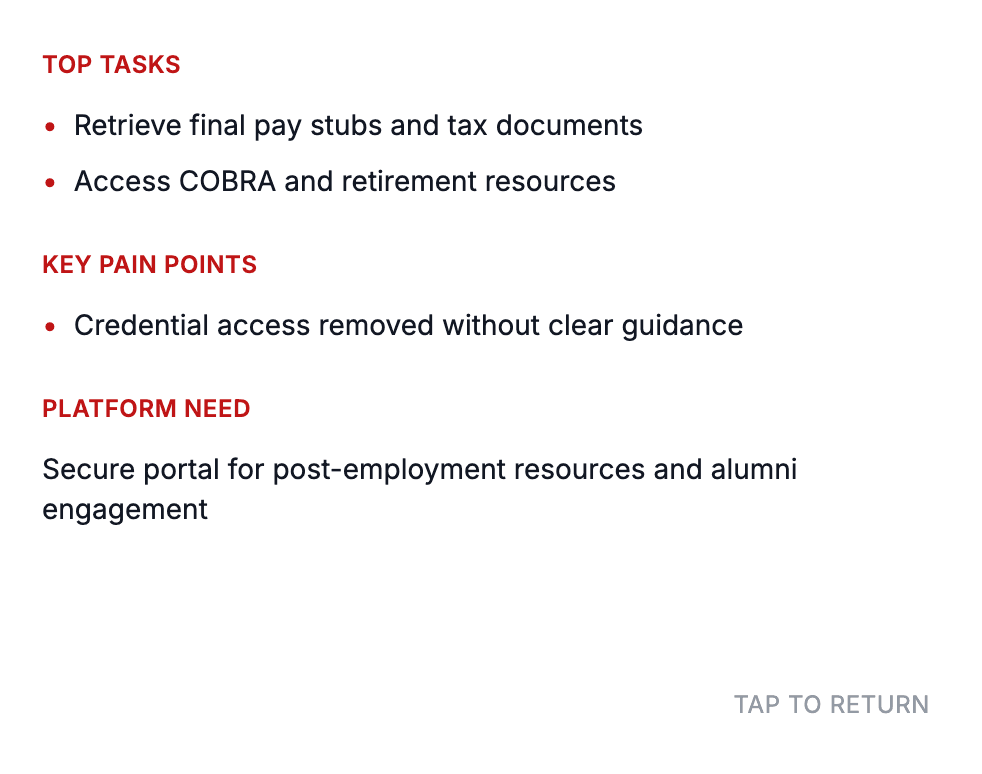
To keep alignment practical, I translated research and stakeholder input into a small set of representative roles. These roles reflected real employee contexts such as frontline staff, corporate employees, managers, and content owners without over-indexing on individual personas.
They became a shared reference point across design, product, and engineering, helping teams evaluate tradeoffs quickly and consistently.
Aligning on workflows before screens.
Once representative roles were established, the next challenge was aligning on how employees actually moved through HR and IT services. I mapped end-to-end workflows to make handoffs, ownership boundaries, and breakdown points visible across teams.
These workflows created a shared understanding of where employees experienced friction and where design could simplify without overstepping organizational constraints.
Workflows surfaced organizational friction, not just UX gaps.
Designing across integrated systems .
ColleagueZone depended on multiple underlying systems across HR and IT, each with its own data model, ownership, and update cadence. Rather than treating integrations as implementation details, I considered them early as part of the design problem especially where handoffs, status visibility, and escalation paths mattered to employees.
This framing helped distinguish design issues from system limitations, and informed where the experience needed to set expectations rather than attempt to mask complexity.
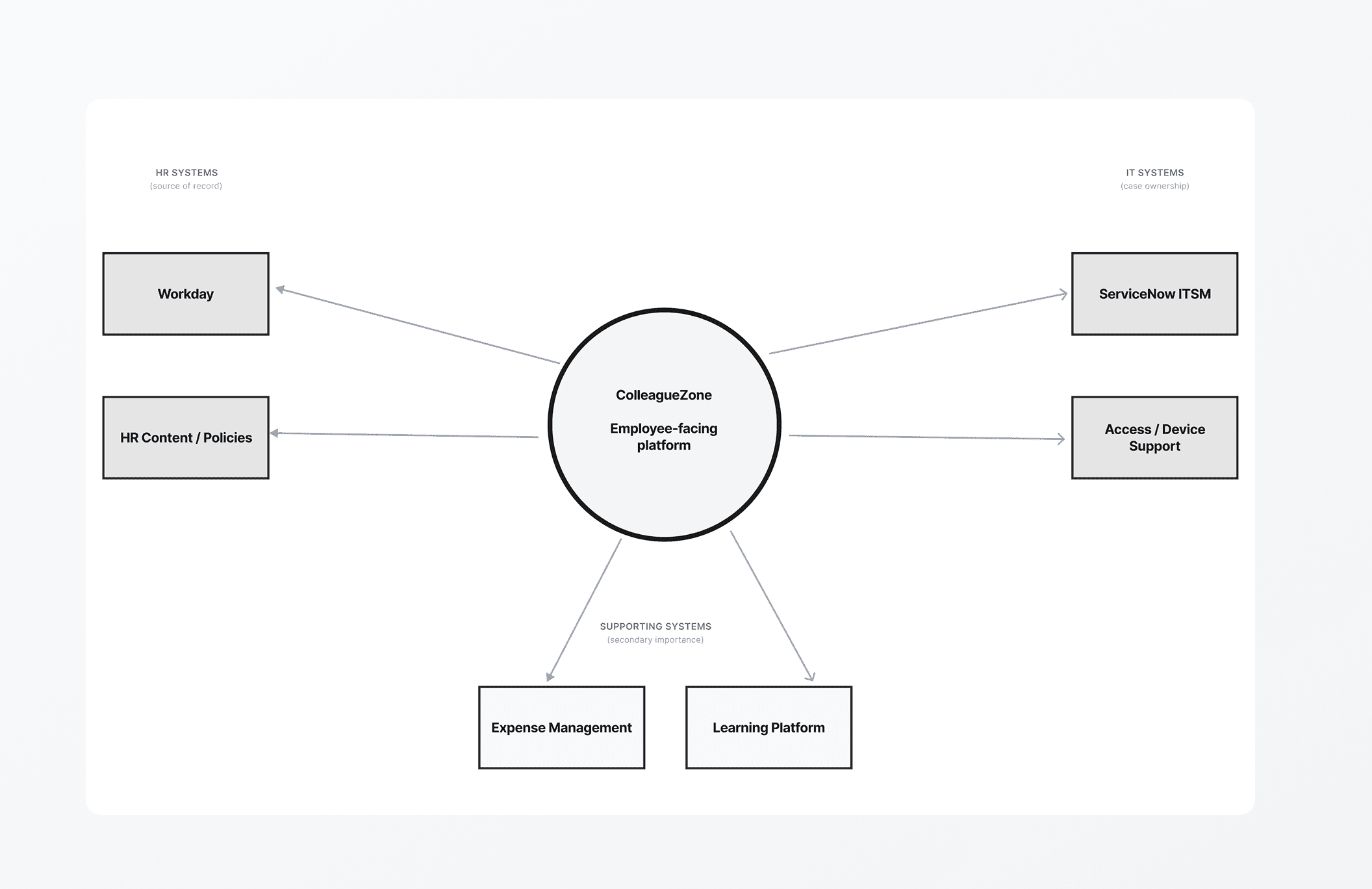
Understanding these boundaries made it possible to design navigation and patterns that respected system ownership while still feeling cohesive to employees.
Balancing employee needs with organizational structure .
With workflows aligned, attention shifted to navigation and information structure. The sitemap became a tool for balancing employee mental models with internal ownership boundaries ensuring content was discoverable without obscuring accountability.
Rather than reorganizing content arbitrarily, navigation decisions were grounded in how employees expected services to be grouped and accessed.
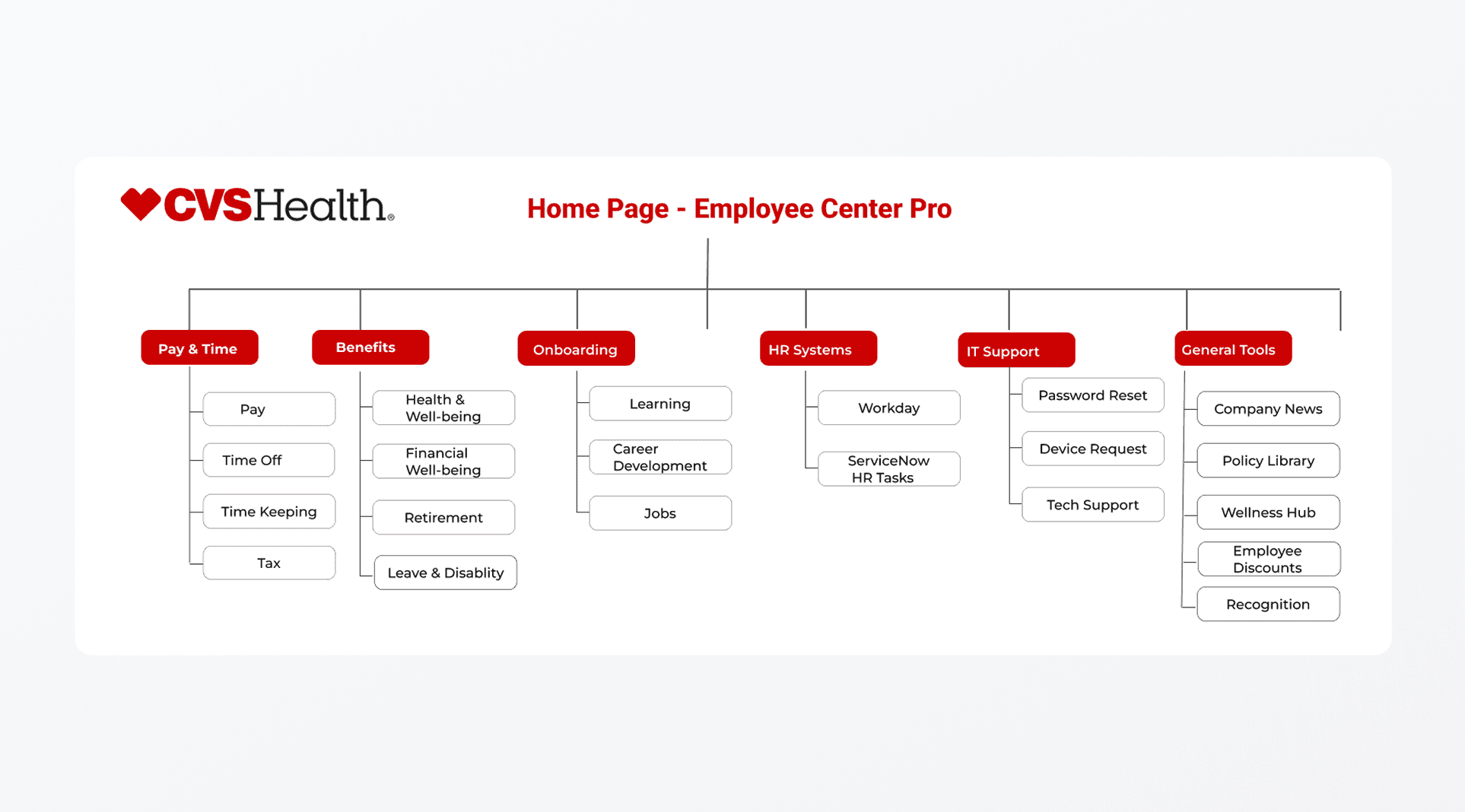
Navigation is a design decision, not a content exercise.
Translating structure into scalable design.
With structure in place, I evaluated how ServiceNow’s out-of-the-box components could support these patterns consistently across teams. The focus was on reuse selecting components that could flex across HR and IT without introducing fragmentation.
This approach ensured that design decisions could scale through configuration rather than custom builds.
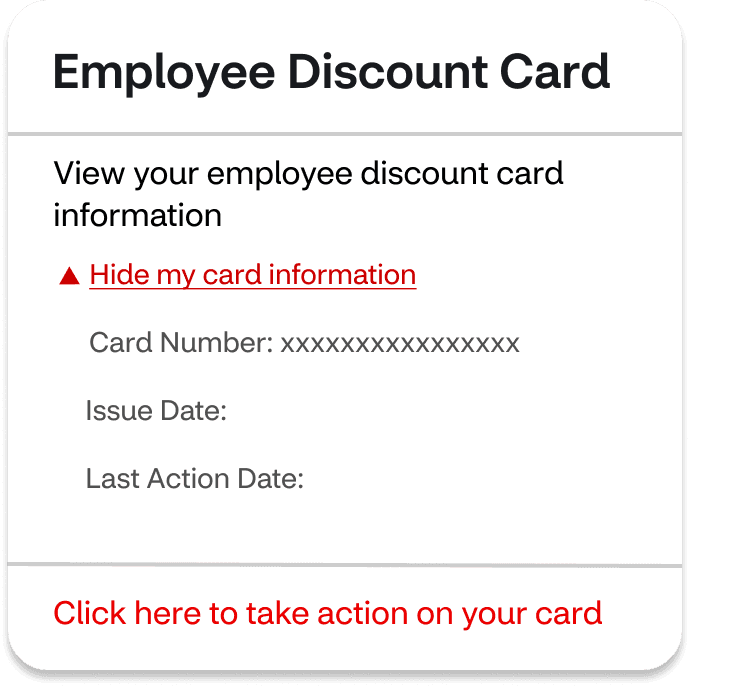
Employee Discount Card (Custom adaptation)
Designed a CVS-specific discount card to surface eligibility and instructions for a high-value benefit that employees access frequently.
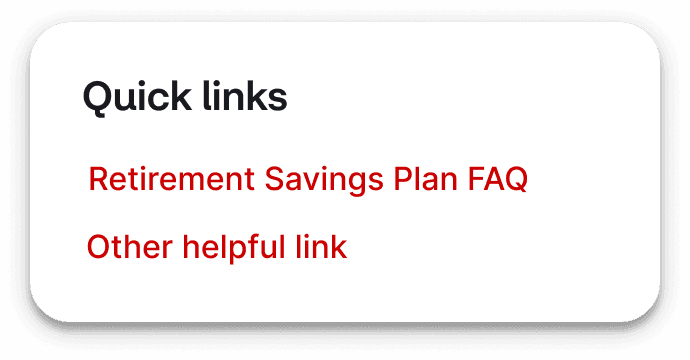
Quick Links (OOTB, curated)
Curated and reordered links based on employee intent, reducing navigation depth without introducing custom behavior
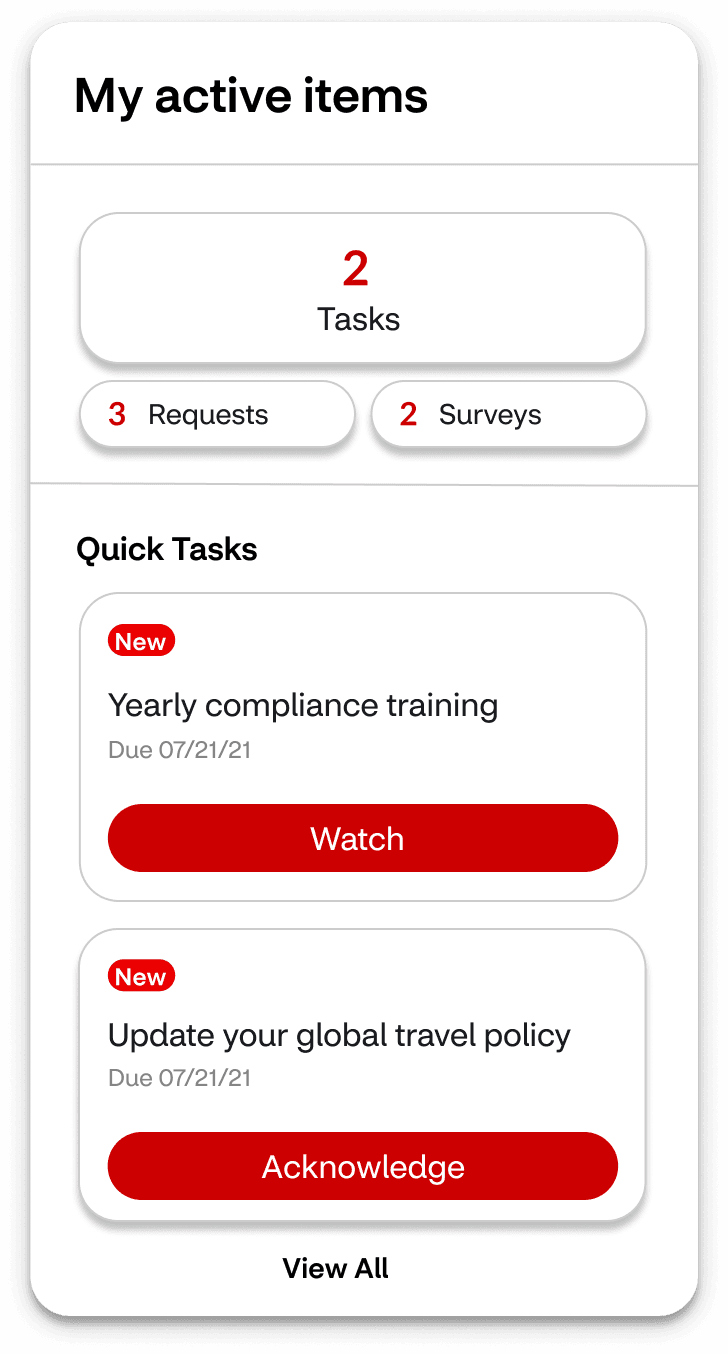
My Active Items (OOTB, adapted)
Adapted the OOTB widget to prioritize CVS workflows, making task status and approvals easier to track at a glance.
Future-facing Widgets (Designed for scale)
Designed flexible patterns for upcoming needs like meal waivers and 401(k) actions, allowing the experience to scale without one-off solutions.
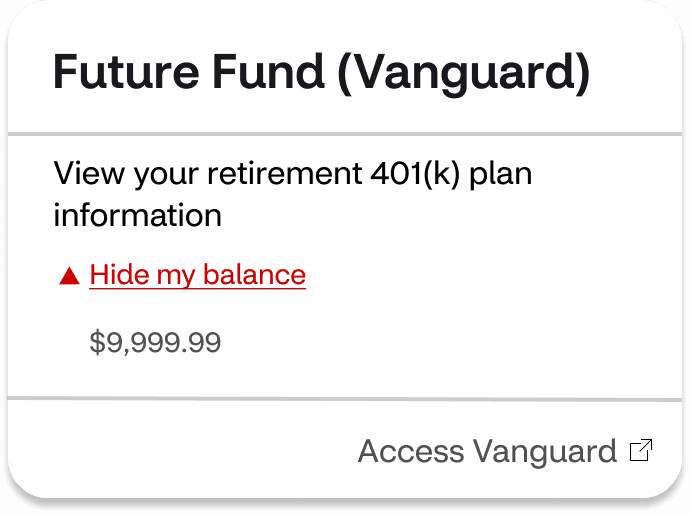

Scalability depended on configuration, not customization.
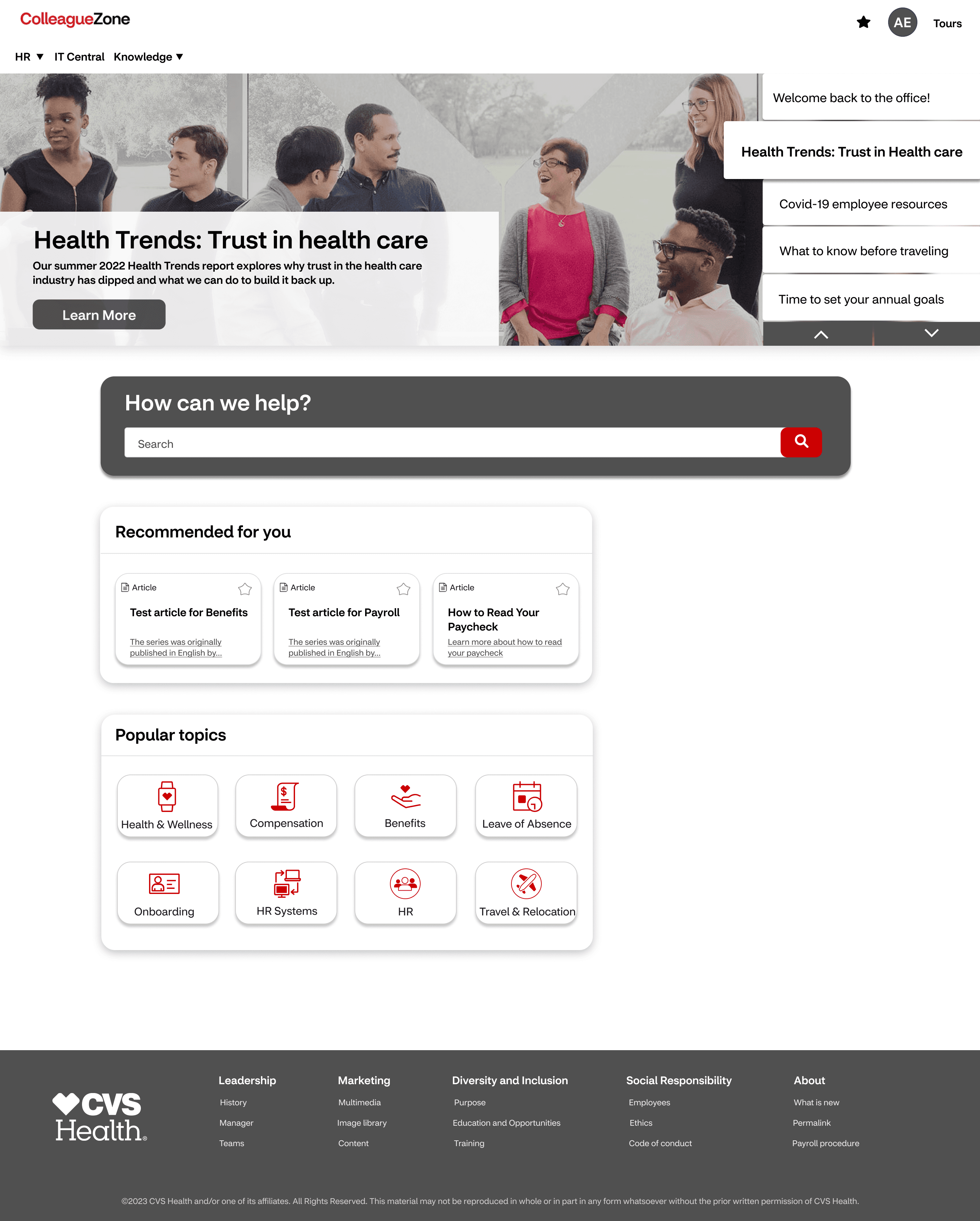
Current system.
The current experience reflects the system-level decisions made earlier consistent structure, predictable entry points, and shared components across domains. While content and ownership vary, the experience remains familiar to employees.
1
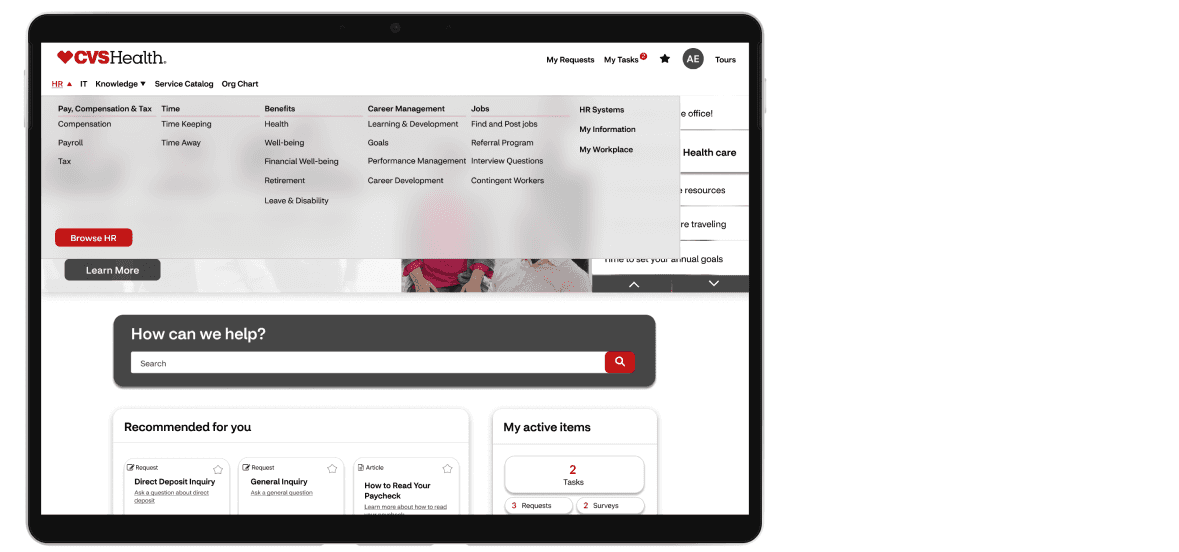
Entry — Search & Guidance
Employees begin with a clear, search-first entry point designed to help them quickly find the right information or action without needing to understand internal systems or categories.
Design focus
Reduce ambiguity
Encourage correct routing early
Minimize navigation depth
2
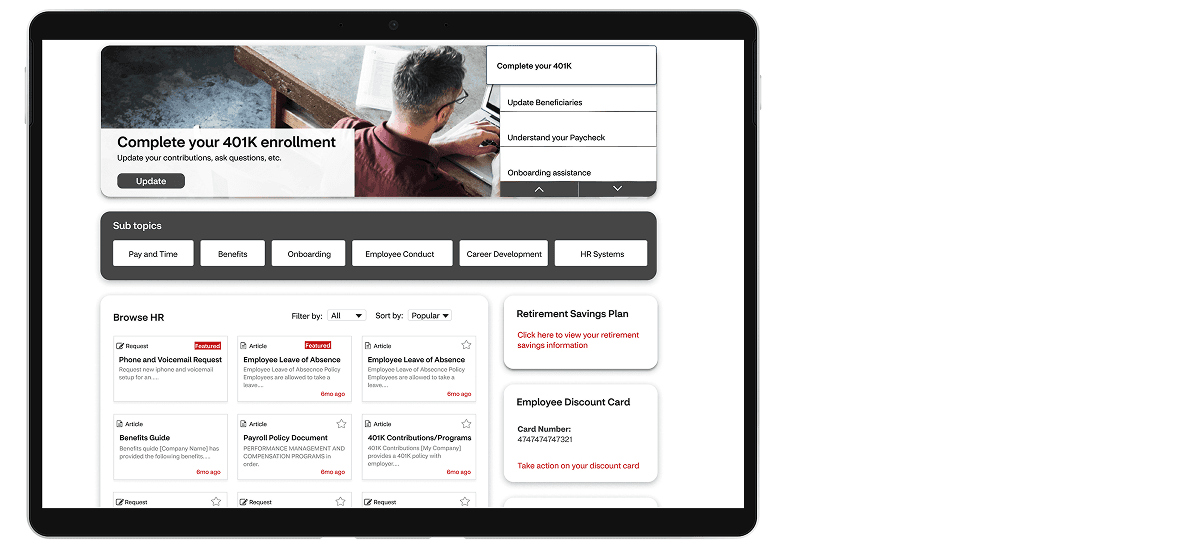
Discover — Recommendations & Quick Tasks
Based on common colleague needs, relevant requests, knowledge articles, and quick tasks are surfaced early to guide employees toward self-service options.
Design focus
Reduce decision fatigue
Prevent unnecessary ticket creation
Surface high-frequency actions
3
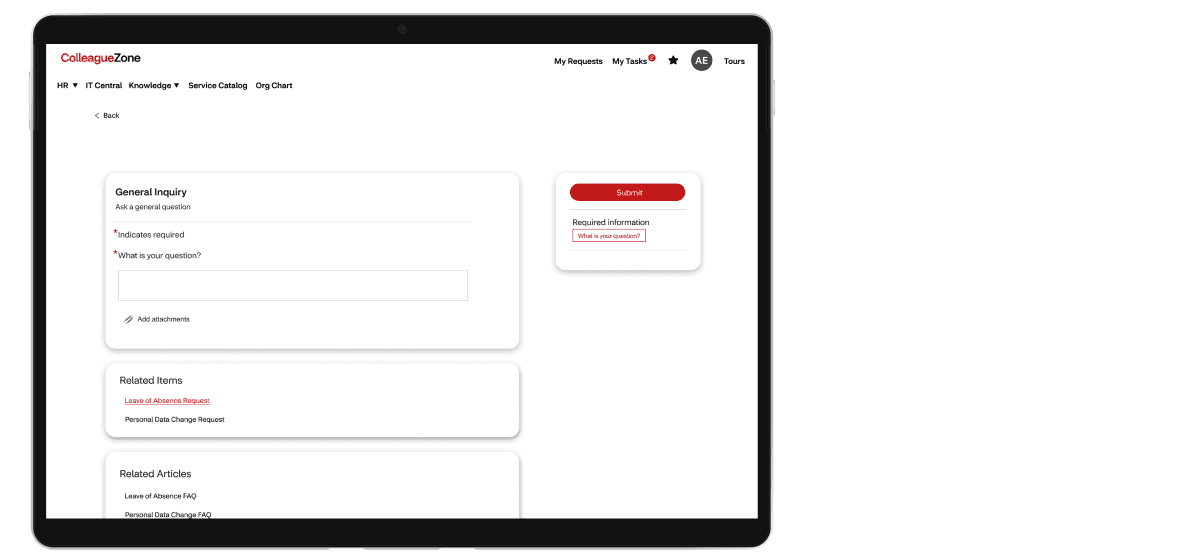
Act — Task Completion
Request flows are structured with clear labels, grouped inputs, and upfront expectations to make task completion faster and more predictable.
Design focus
Reduce form abandonment
Improve submission quality
Minimize back-and-forth with support teams
4
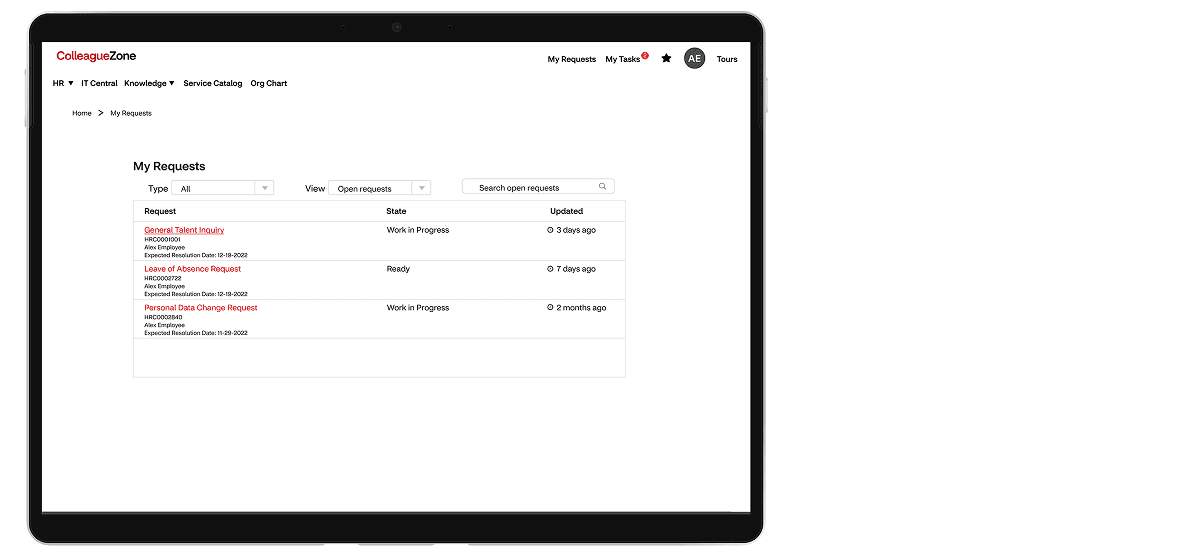
Track — Status & Visibility
Employees can easily see what’s in progress, what requires action, and what’s complete—all in one place.
Design focus
Build trust
Reduce follow-ups
Increase transparency
AI-powered support embedded into the employee journey
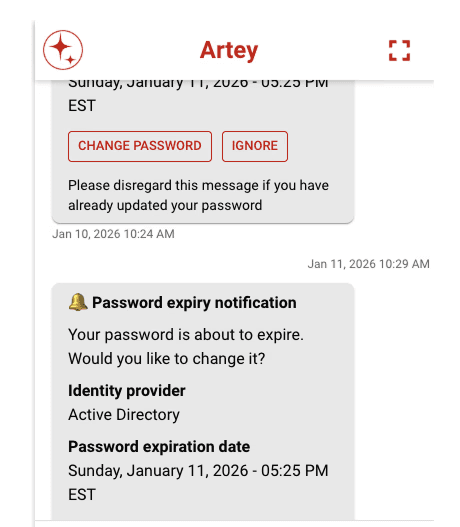
As a final layer of the experience, we introduced ServiceNow’s Virtual Agent to help employees get answers and initiate common tasks without leaving ColleagueZone.
Outcomes & reflections.
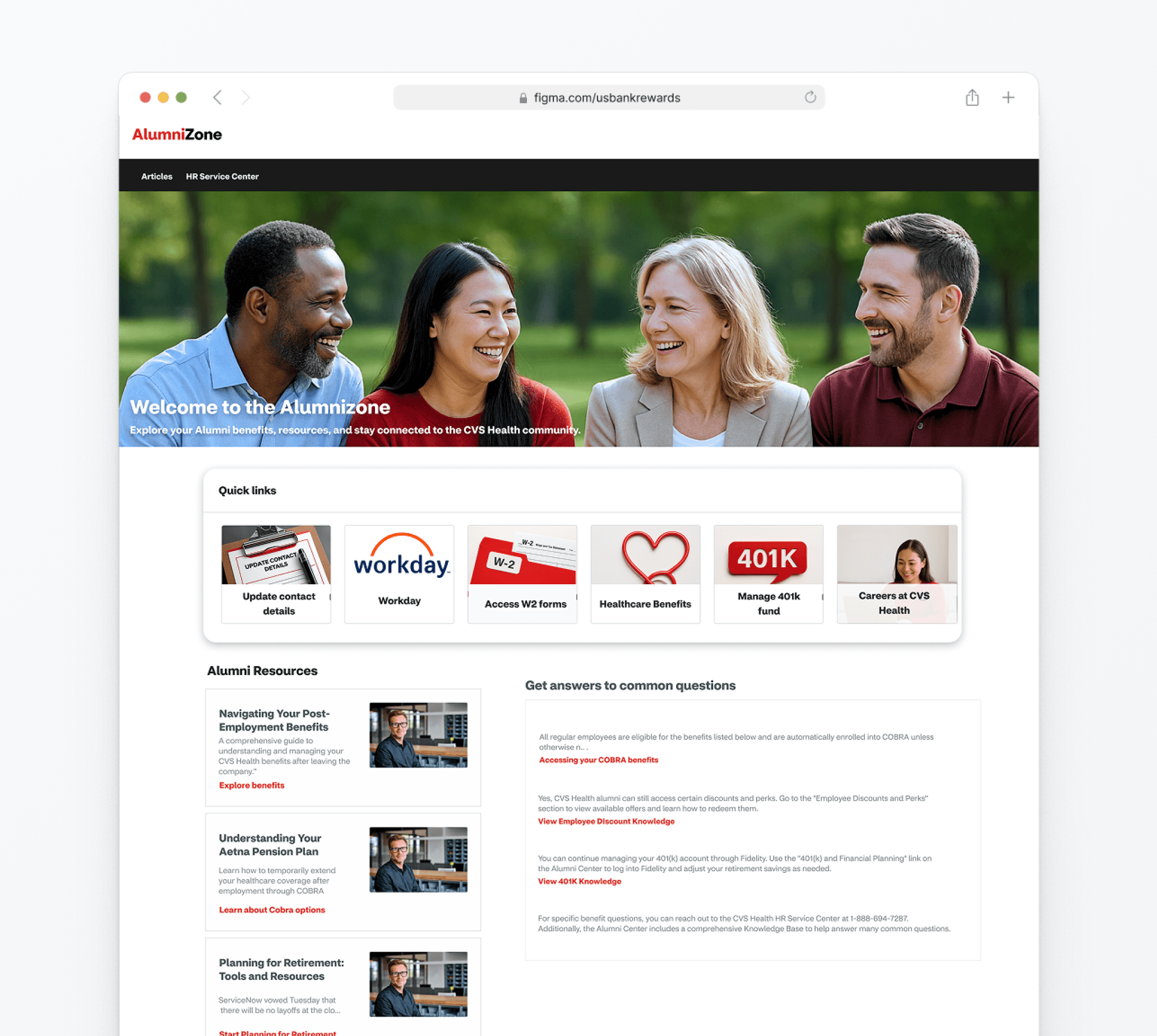
Shipping this experience required balancing speed with long-term maintainability. By adapting out-of-the-box ServiceNow components and validating workflows early, we were able to move quickly without creating one-off solutions that would be hard to support. Next, the platform is positioned to expand through the Alumni Center, deepen automation for common requests, and improve edge-case handling while maintaining a consistent experience across employee lifecycles.